

Manage performance with greater visibility
Steam and thermal systems underpin patient safety, clinical operations and regulatory compliance. The quality of steam delivered to critical processes, such as sterilization, is not just an operational factor; it directly impacts clinical outcomes, infection control, and audit readiness.
Without a clear view into how your system is performing, inefficiencies and risks often remain hidden, driving up costs and uncertainty across your organization.
The role of steam systems in safe, efficient healthcare delivery
Steam remains the most effective way to deliver thermal energy across healthcare environments because it supports reliable, controllable and energy-efficient operations at scale. When systems are performing as they should, steam enables consistent sterilization outcomes, responsive heating, and efficient hot water generation across complex hospital facilities, including:
Maintaining compliance and performance
Industry guidance, including AAMI ST108 & AAMI ST79, highlights the importance of maintaining appropriate steam quality, purity and quantity for effective sterile processing. Steam quality is influenced by the entire steam system, including generation, distribution, condensate management and ongoing maintenance.
Why do healthcare facilities use steam? Watch now to learn more!
The challenge
Hospitals operate 24/7 and face growing pressures on budgets and an infrastructure that must perform reliably, continuously and safely; often with limited visibility into how systems are operating.
Your steam and thermal systems are often viewed as operational utilities. Their performance can have a significant impact on financial performance, asset resilience and compliance risk across the estate.
When inefficiencies, steam losses or equipment issues go undetected, the effects are rarely limited to energy consumption alone. Maintenance demands increase, compliance risks become harder to manage, and critical services can become more vulnerable to disruption.
Issues you may be facing:
To improve performance, hospitals must first measure and understand their existing systems – meter, monitor, then act. For many facilities teams, maintaining compliance with Joint Commission (if accredited) expectations and relevant AAMI standards is a daily operational priority. Limited visibility into steam and thermal system performance increases uncertainty and audit pressure.
Better steam performance delivers wider benefits
Improving hospital steam performance is about more than reducing energy use. It can lower the total cost of ownership, support sustainability goals, reduce operational and compliance risk, and build greater resilience across critical hospital infrastructure. The result is a more reliable and efficient steam system that supports patient care, operational continuity and long-term facility performance.
A structured approach to lasting improvement
Sustainable improvement starts with a clear understanding of current performance. Our structured approach combines engineering expertise, system data and digital connectivity to identify and quantify losses, prioritize the right improvements and track their impact over time. This reflects the supporting material’s progression from assessment and prioritized action to ongoing monitoring and expert analysis.
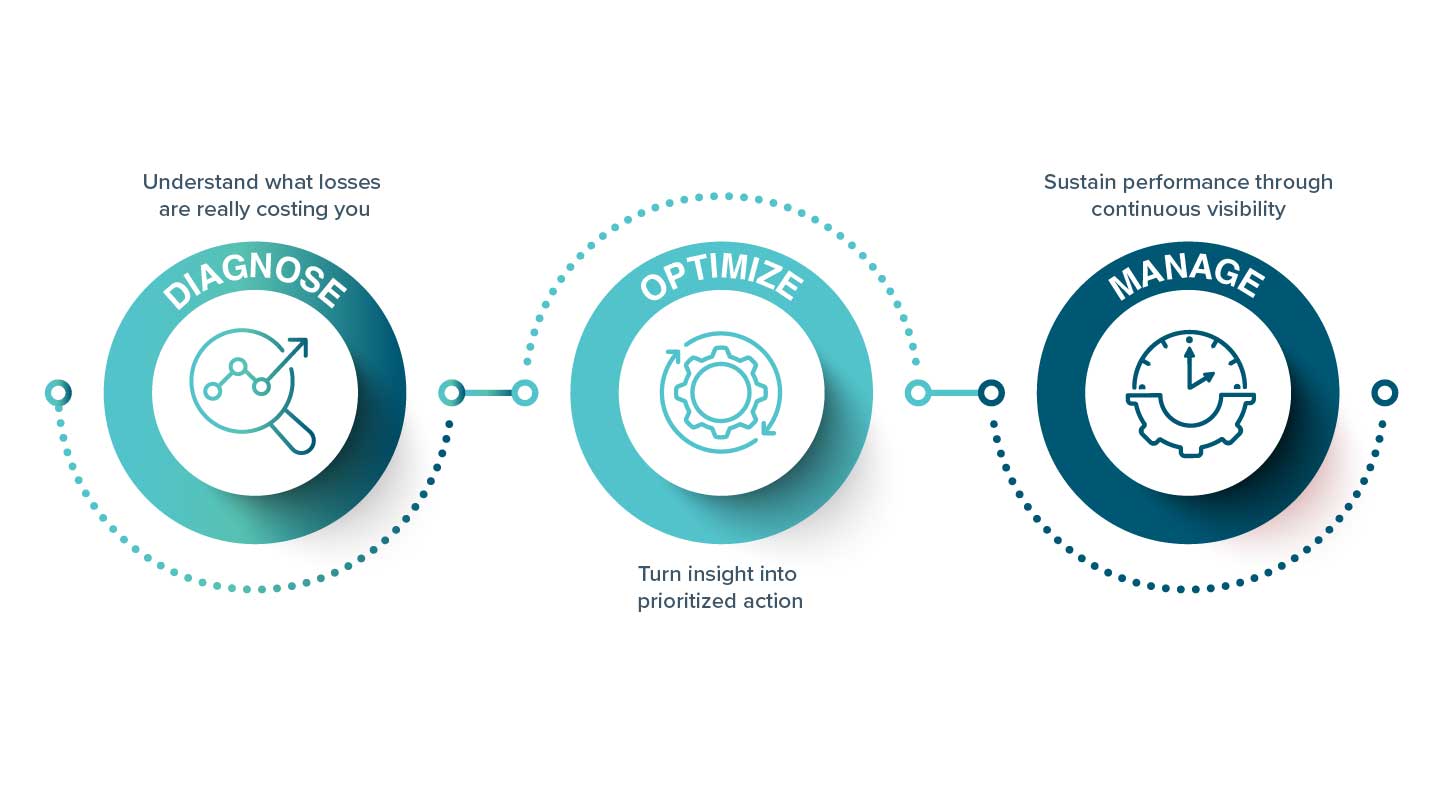
Diagnose first
Moving beyond reactive approaches
Without structured diagnosis or the real‑time condition data required for predictive maintenance, teams are forced into reactive maintenance and short‑term solutions. Heat exchanger fouling and emerging steam system faults often go undetected until performance drops or failure occurs. This makes it difficult to prioritize investment or demonstrate lasting improvement. As a result, teams often treat the symptoms rather than root causes—leading to recurring issues and repeated intervention.
Understand where your steam and thermal energy systems are losing energy, increasing costs or limiting performance. By combining engineering expertise, on-site assessment and system data, we identify and quantify opportunities for improvement.
You receive clear recommendations ranked by impact and feasibility. From immediate efficiency measures to larger projects, each opportunity is supported by the information needed to build a stronger business case.
Optimize: Turn diagnostic insights into action
Following the diagnostic phase, we work with your team to turn system insights into targeted improvements that reduce energy use, operating costs and emissions.
From steam trap repairs and upgrades to condensate and flash steam recovery, we help improve performance, verify savings and sustain the gains achieved.
Manage performance with greater visibility
Once improvements are in place, we combine digital technology with steam engineering expertise to help you manage performance over time. By adding continuous monitoring to your annual inspection, you gain year-round visibility of system performance, energy use and equipment health.
Steam and thermal systems are dynamic. Loads change, assets age and performance can drift over time. Real-time metering, steam trap monitoring and digital dashboards provide the data. Our engineers turn it into actionable insights, helping you verify cost and CO₂ savings, improve reliability and identify further opportunities for optimization.
How Spirax Sarco helps
Spirax Sarco brings a long heritage of steam engineering to the complex demands of modern healthcare. Working as a trusted advisor, our specialists help hospital teams understand system performance, address steam quality and support reliable, compliant operation across critical applications.
Solution focus
Clean Steam Generator
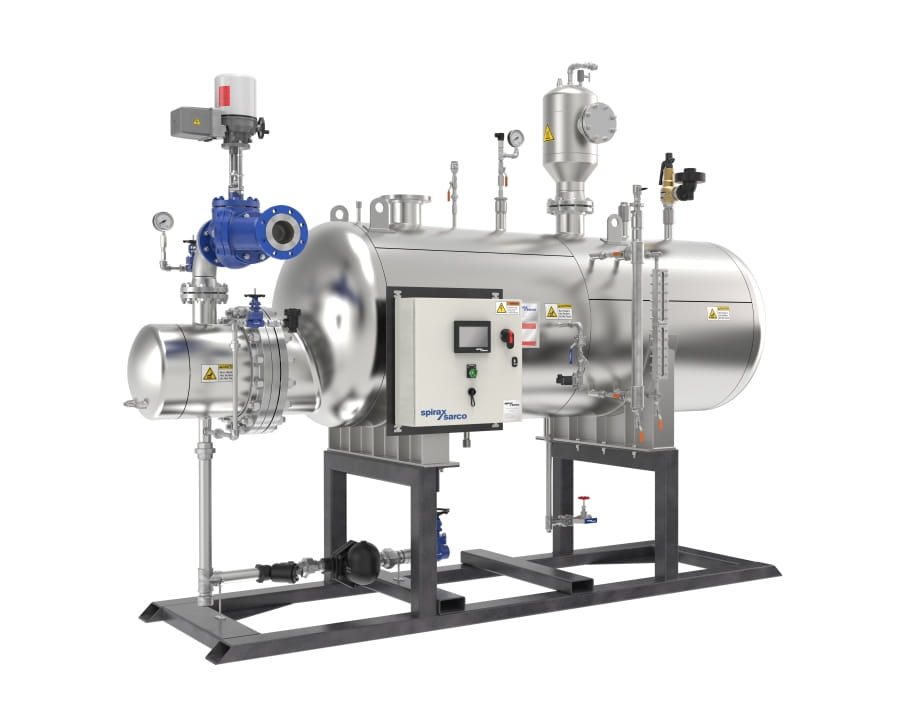
Spirax Sarco offers a range of clean steam generators designed specifically for centralized sterilization departments. Each unit is engineered with practical, innovative features and supplied as a packaged solution, ready for straightforward installation and commissioning. The technology is validated to meet EN285 steam quality requirements, as well as other comparable global standards – giving you confidence in both compliance and performance. Learn more
EasiHeat heat transfer solution
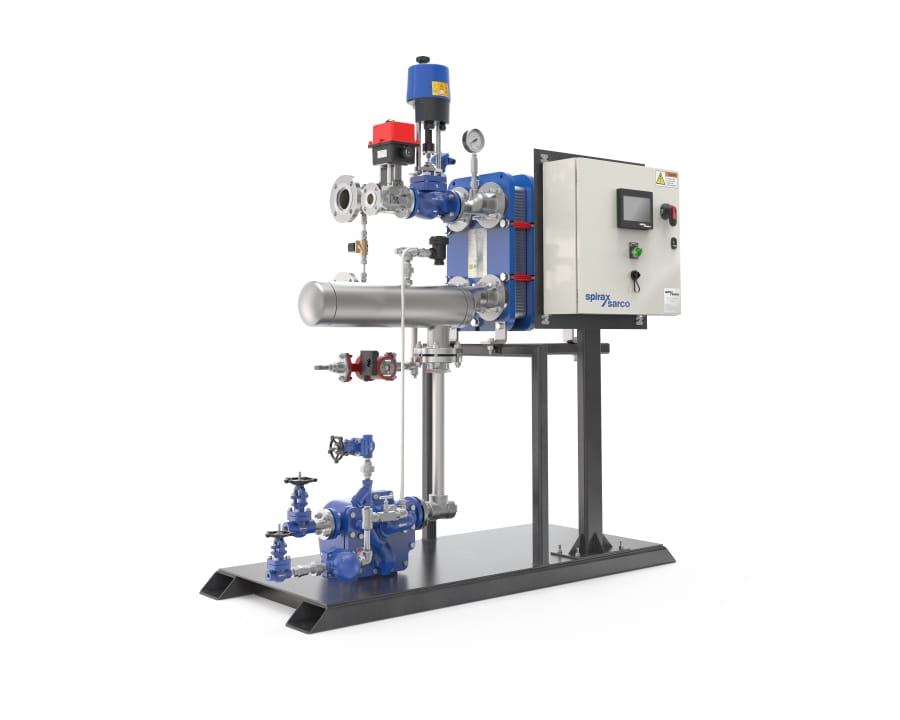
Traditional hot water systems can struggle to meet hospital demands for safety, resilience and efficiency – often requiring large storage volumes, complex maintenance and higher energy use.
EasiHeat provides instantaneous, semi-instantaneous or stored hot water solutions designed specifically for healthcare environments, delivering reliable performance with a compact, efficient footprint. COMING SOON
EasiHeat Insights solution

Reliable, compliant hot water is essential in hospitals. Yet limited system visibility can make safety, efficiency and cost harder to manage, allowing risks and waste to remain unseen. EasiHeat Insights turns real-time performance data into practical intelligence, helping teams monitor, analyze and optimize hot water generation with greater clarity, control and confidence onsite every day. COMING SOON
Wireless Steam Trap Monitoring

Wireless steam trap monitoring provides continuous visibility of trap condition, helping ensure condensate is removed where it matters most. By monitoring traps that are critical to sterilization and other sensitive processes, issues can be identified and addressed early – reducing the risk of wet steam, avoidable energy loss and unplanned disruption. Learn more
Discover more from Spirax Sarco
Could your hospital sterilization process be more reliable and consistent?
Discover how your hospital sterilization department could benefit by using the right steam quality.
Clean Steam Generator for Healthcare
The new CSG for Healthcare has been specifically designed to deliver high quality steam dryness ≥97%, as expected for the demanding Hospital sterilization process ensuring no more wet packs during any sterilization cycle.
How to ensure positive patient outcomes
Steam plays a vital role in helping to ensure positive patient outcomes in hospitals. This blog article explores a variety of hospital applications that use steam including domestic hot water, sterilization, and humidification.
USA domestic hot water solutions guide for hospitals
Download the guide to get the solutions to common healthcare challenges.
Twelve reasons hospitals should use steam
Hospitals have been using steam for more than 100 years, especially for laundry, humidification, heating, hot water, and sterilization. You may wonder, should hospitals continue to use steam today? This Blog provides you twelve reasons that prove steam is very beneficial and energy efficient for hospitals.
Webinar - Steam in hospitals
Join us for our live free webinar where you will learn steam system best practices for your hospital. The importance of steam quality and how to achieve your hospital's sustainability goals will also be discussed.