
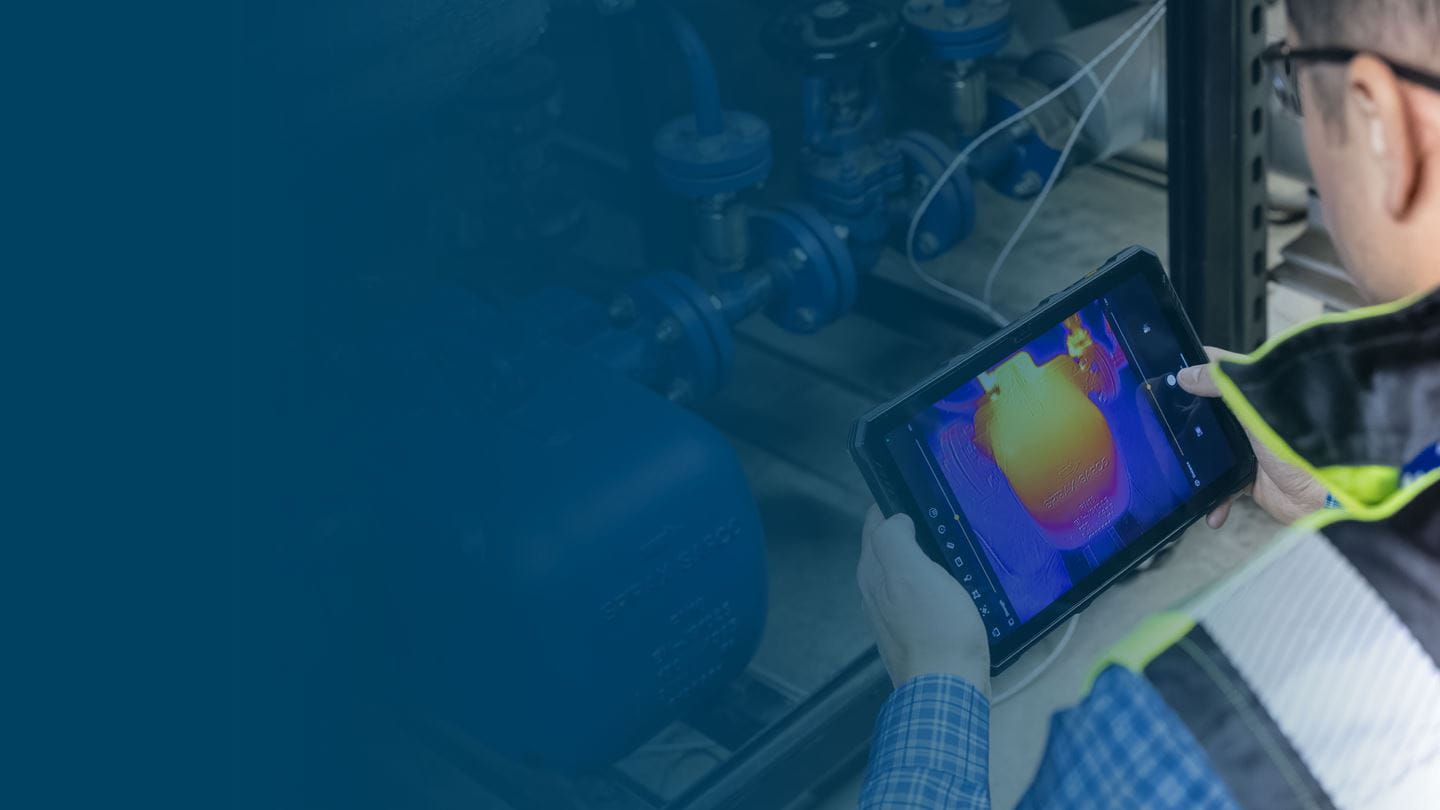
Industrial sites are under pressure to lower energy consumption, reduce emissions and improve system reliability. Many have already tackled the obvious inefficiencies: upgraded boilers, optimised controls, invested in heat recovery, or digital monitoring. Yet a surprising amount of waste continues.
Because some of the biggest energy losses are simply invisible.
Walk through any steam facility and you’ll probably find uninsulated valves, strainers, flanges, heat exchangers or control units. Individually they look harmless. But thermodynamically? They’re hotspots - quietly bleeding heat, 24/7. Losses so significant they can account for the largest avoidable energy waste in a steam network.
The challenge:
You cannot see the heat leaving.
But your energy bill can.

Hidden steam system heat loss: the invisible energy efficiency problem
Steam systems play a vital role in industrial processes, but valuable energy can be lost through insulation gaps and other exposed components. When heat escapes into the surrounding environment, more energy may be needed to maintain system performance. The result can be higher operating costs and increased CO₂ emissions, with no productive benefit.
Uninsulated steam components can reach surface temperatures above 150°C. Even small surfaces radiate large amounts of heat. The cost is often underestimated, but the equation is simple: more surface area × high temperatures = massive ongoing heat losses.
Yet because these losses aren’t always visible, they can fall between maintenance priorities, energy efficiency plans and decarbonisation projects.
And this is precisely where a Heat Loss Survey can help.
More than a thermal image: turning heat loss into action
A thermal camera can show temperature differences across a steam system, but an image alone does not explain the scale, cause or significance of the heat loss.
A Heat Loss Survey adds the specialist knowledge needed to interpret those images in context. It brings together the thermal imaging, site observations and steam system expertise to identify potential losses, assess where they matter most and prioritise practical improvements.
The result is more than a collection of colourful images. It is clear evidence of where attention may be needed and a more informed basis for deciding what to do next.

A low‑cost fix with high impact
Now for the good news.
The solution isn’t a major project, a new system or a capital‑heavy upgrade.
It’s insulation.
High-quality, removable insulation jackets designed for steam components can reduce heat loss by up to 80–90%, helping to maintain temperature, limit condensate formation and reduce the conditions that can contribute to water hammer.
Most projects:
- payback can be achieved in under 12 months
- improve reliability by stabilising system temperatures
- lower site CO₂ emissions immediately
In an era where industrial facilities are searching for “quick wins” with real environmental impact, this is one of the clearest ROI cases available.
Benefits of Heat Loss Surveys for industrial energy efficiency
Energy‑intensive industries are tightening their focus on Scope 1 and 2 emissions. Boards and sustainability managers want initiatives that are:
- simple to start
- low risk
- proven
- quantifiable
- fast to implement
And an on‑site Heat Loss Survey delivers these.
By combining:
✔ thermal camera data
✔ a standardized, expert assessment
✔ local‑language ROI calculations
✔ a prioritised action list
…companies can then move quickly from an imaging scan → insight → savings.
It empowers sustainability teams with the data they need and maintenance teams with a practical plan they can execute immediately.
How Heat Loss Surveys support steam system optimisation
Depending on their application and operating conditions, steam systems can operate at elevated temperatures. Where components are uninsulated or poorly insulated, heat loss can continue throughout operation. Insulation is often a practical maintenance measure, making Heat Loss Surveys a valuable part of wider industrial decarbonisation plans.
It’s also why addressing the “invisible losses” is often the fastest way to:
- free up operational budget
- reduce site emissions
- stabilise process temperatures
- improve worker safety
- protect assets
- extend equipment life
Most efficiency projects require investment before impact. However, a heat loss survey can deliver before the investment feels significant.
Turning insight into action
Not every energy-efficiency improvement needs to begin with a major project. A Heat Loss Survey can identify overlooked opportunities across the steam system, from an uninsulated component revealed by thermal imaging to areas where targeted insulation could reduce avoidable energy loss. By quantifying and prioritising these findings, the survey gives engineering and energy teams clearer evidence for deciding where to act first.
Making the invisible visible is the first step. Acting on it is where the real value begins.
Stop the steam loss you can’t see and unlock the savings you didn’t know you had.
If you are looking for a practical way to reduce heat loss in your steam system, book a Heat Loss Survey with Spirax Sarco and find out where your site could save energy today.

Heat loss surveys for steam systems
Find out more about identifying hidden heat loss in steam and condensate systems with thermal imaging. Prioritise insulation improvements, reduce avoidable energy waste and support carbon reduction goals.
Achieve your net-zero goals
Create a practical path to decarbonisation with expert guidance, system insights and proven solutions that help you reduce emissions while maintaining performance.
Stop the energy thieves!
Are you ready to stop the energy and heat thieves in their tracks? Our reusable insulation jackets are like security guards for your steam system.
Wireless steam trap monitoring
Our Wireless Steam Trap Monitoring system offers a seamless, efficient, and reliable way to keep your steam traps in check. By leveraging cutting-edge wireless technology, our solution helps you prevent energy loss, reduce unplanned maintenance costs, and ensure the safety of your operations.
Your path to a fully decarbonised steam system starts here
Achieving sustainability in steam helps us all move toward the global ambition of carbon neutrality, and as the global leader in steam system excellence, we are dedicated to supporting our customers in finding their path to the net-zero goal.
Steam Insight services
Our monitoring system generates information about the most common problems of steam and thermal power plants.